

CRO · HFF human studies
Human application studies for health functional foods
AriBnC has been a KoNECT-registered CRO since April 2023 and carries out study design, biostatistics, EDC build and operation, and CRF design in-house at the Yongin head office laboratory. A sponsor preparing an individually recognised functional ingredient can contract only the scope it needs: running the human study (clinical), adding the MFDS filing and deficiency responses (clinical plus regulatory), or a full-service engagement running from nonclinical through to the dossier.
- KoNECT-registered CRO (April 2023)
- Dossier support for individually recognised functional ingredient applications · own ingredient individually recognised by the MFDS (No. 2025-3, 2025)
- Yongin head office lab: study design, biostatistics, EDC, CRF
Human application studies and the individual recognition pathway
What the study actually is, and where it sits in an ingredient dossier.
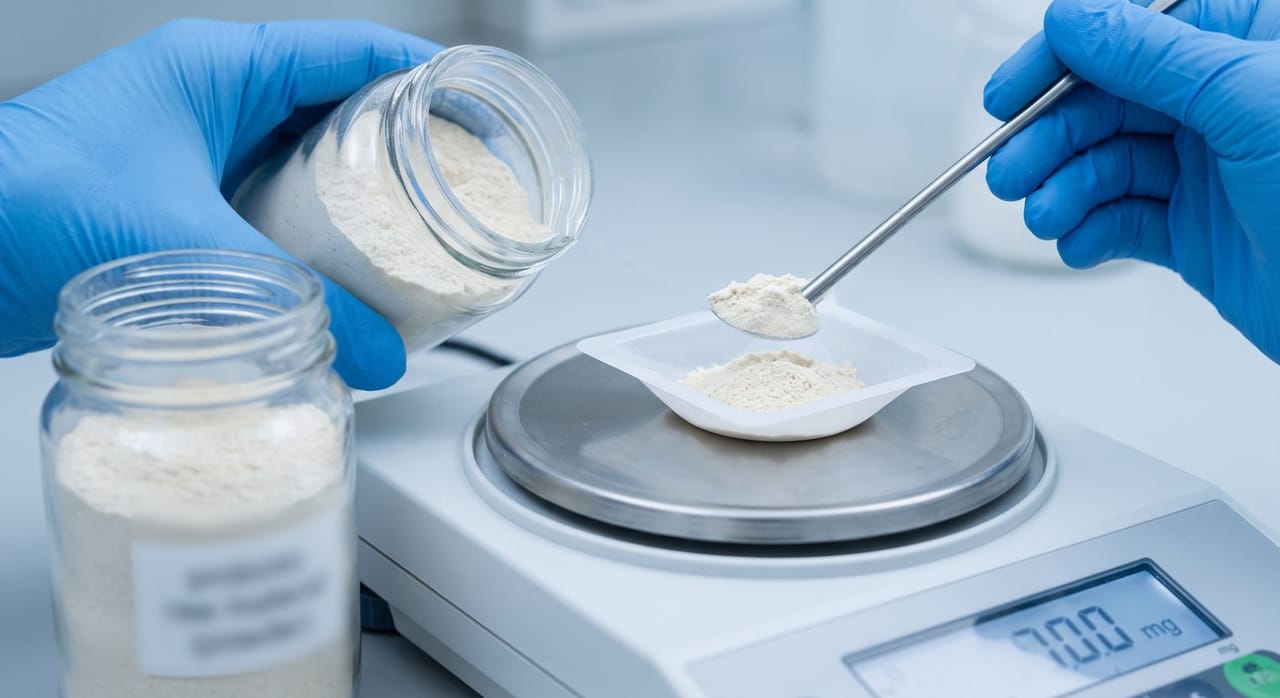
In a human application study — the MFDS term for a clinical study of a health functional food — participants take a health functional food, or an ingredient intended for one, over a defined period, and pre-specified endpoints are measured by pre-specified methods and recorded; the results serve as supporting evidence submitted for functionality review. AriBnC does the design, the biostatistics, the EDC build and operation and the CRF design for these studies at its Yongin head office laboratory.
Individual recognition is the route by which a manufacturer assembles its own dossier and files with the MFDS for an ingredient that is not among the generic (notified) functional ingredients listed in the Health Functional Food Code. The dossier covers origin and manufacturing process, specification and marker compound, safety, and the functionality evidence; the human application study is the core piece of that last part. We prepare every study and document the MFDS application calls for.
AriBnC has supported the preparation of application dossiers for a range of individually recognised ingredients, for a number of client companies.
Clinical stage — the six steps AriBnC takes on
The sponsor supplies the ingredient and the test food; the steps below are ours.
Study design
We fix the daily intake, the intake period, the subject criteria, and the primary and secondary endpoints with their measurement time points. In the same sessions our Yongin biostatistician drafts the sample-size rationale and the skeleton of the statistical analysis plan. If filings beyond the MFDS are planned for the US, Canada or the EU, our in-house regulatory affairs staff join the design meetings so the endpoints and the way records are kept fit each market's requirements.
IRB submission and responses
We propose candidate sites and prepare the protocol, subject information sheet, consent form and CRF draft, then answer the IRB's questions. The CRF draft that goes to the IRB is the same document that will be implemented in the EDC, so the person who will build the EDC designs it from the start. Recruitment begins after IRB approval, using the recruitment wording the IRB approved.
Start-up and site training
We run the start-up under the approved protocol and handle trial registration where registration applies. Site training is delivered by the person who wrote the protocol together with the person who built the EDC, so the protocol, the CRF completion rules and the sample handling rules are explained in one session by the people who set them.
Monitoring
We check visit-window compliance, consent records, test-food accountability and adverse event records. Each visit is written up as a monitoring report, and findings are tracked through corrective actions until closed. Because the same team runs the EDC, a monitoring finding and the data query it raises close in one record rather than in two systems.
Data management and EDC
The EDC is built and operated in-house at the Yongin head office. We design the CRF screens and edit checks, work the data queries, and keep the audit trail through to database lock. There is no external EDC vendor in between, so screen changes and edit-check changes are made by the same team and the change history stays with us.
Our research organisationStep 6Analysis and study report
We analyse according to the statistical analysis plan fixed in advance and write a study report that states what was observed. Where the contract extends to the regulatory stage, the report is handed to the regulatory affairs staff inside the same company, so its format is set to the filing requirements from the outset.
Track record

The CRO and regulatory services overview shows, stage by stage, where we can pick up your project.
What gets fixed at the design stage
The items decided at the design stage, with examples of the options. The final value of each item differs by project, depending on the ingredient and the dossier requirements.
| Design element | What is decided | When fixed |
|---|---|---|
| Study design | Whether randomisation, blinding and placebo control apply; parallel-group or crossover | Before protocol finalisation |
| Subjects | Age range, inclusion and exclusion criteria, screening tests | Before protocol finalisation |
| Intake amount and period | Daily amount, how and when it is taken, total intake period | Before protocol finalisation |
| Endpoints | Primary and secondary endpoints, measurement methods and time points | Before protocol finalisation |
| Sample size | Rationale based on the primary endpoint, dropout assumption, allocation ratio | Before protocol finalisation (biostatistics) |
| Test food and placebo | How appearance, smell and packaging are confirmed to match; labelling; accountability handling | Before IRB submission |
| Safety observation | How adverse events are collected, laboratory tests and their timing, reporting route | Before protocol finalisation |
| Statistical analysis plan | Analysis set definitions (ITT, PP), handling of missing data, analysis methods and significance level | Fixed before database lock |
What you supply, what we deliver
If we receive the materials below at the pre-contract review stage, we come back with the design options that are feasible, a schedule, and a list of what is still missing. If the materials do not exist yet, we discuss the project as a full-service scope starting from the nonclinical stage.
- Ingredient information — origin, outline of the manufacturing process, specification and marker compound analyses
- Supply plan for test food and placebo — manufacturer, quantity, stability data, delivery timing
- Existing evidence — in vitro and in vivo results, a list of literature in and outside Korea, history of use
- Safety materials — toxicology results, adverse event history, review of groups for whom intake is restricted
- Target markets — whether filings with the US FDA, Health Canada or the EU are planned alongside the MFDS
What AriBnC hands over
Frequently asked questions
How long does one human application study take?
It depends on the intake period, the recruitment rate and the IRB schedule. At the pre-contract review we look at your ingredient materials and return a design option together with an estimated schedule.
If the study is completed, will the ingredient be recognised?
Recognition is decided by MFDS review. We build the dossier in the required form with the required evidence structure; where the contract extends to the regulatory stage, we also handle the filing and deficiency responses.
How is the study site chosen?
We draw up a nationwide list of candidate sites that fit the ingredient, the endpoints and the participant criteria, and settle on the one that suits the study best. Assay panels and how the site connects to the EDC are checked while the candidates are still being reviewed, so that the design does not have to be reopened once a site is chosen.
Can we start with the clinical stage and extend to the regulatory stage later?
Yes. That said, if a submission is in view, telling us at the design stage is what lets us design the studies to fit the regulatory route — the endpoints and the way records are kept have to be set to meet the submission requirements.
Can overseas filings be prepared at the same time?
Yes. Filings for the US FDA (GRAS, NDI), Health Canada (NHP/NPN via the NNHPD) and the EU (novel food Reg. 2015/2283, health claims Reg. 1924/2006, EFSA) are handled by regulatory affairs staff inside the same company, so telling us the target markets at the design stage is what lets us plan the study design and the submission strategy together from the start. We go through each framework in detail at the consultation.
We have no nonclinical data at all. Can we still consult you?
Yes. We discuss it as a full-service scope starting from the nonclinical stage, which runs from in vitro bioactivity screening through in vivo mechanism work, specification, marker compound, manufacturing process and analytical method, and safety review.
Send us your ingredient materials and we will come back with the design scope that is feasible, an estimated schedule and a list of what is still needed.